
Roofing Dumpster Rental · Janesville, WI
Roofing Dumpster Rental in Janesville, WI
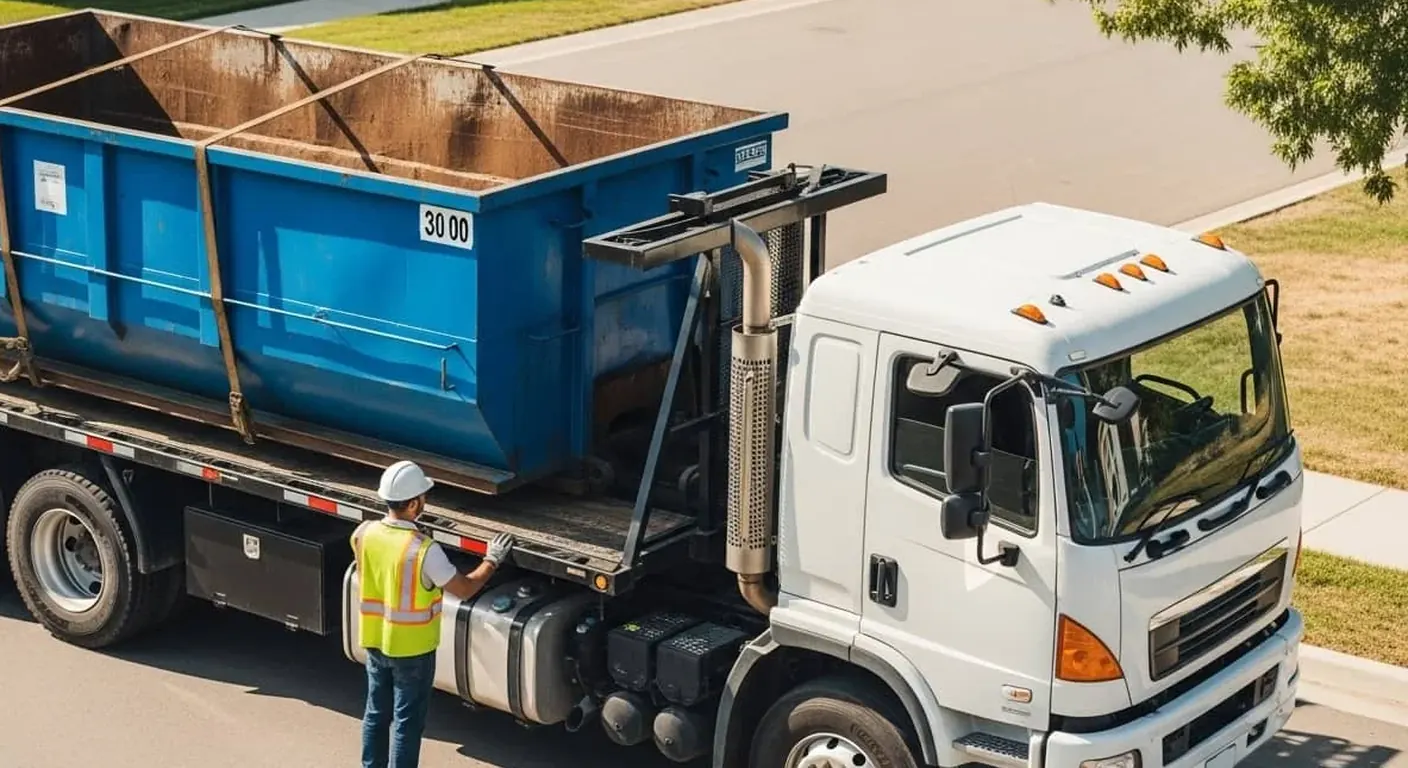
Containers sized by squares and layers rather than guesswork, set tight to the shovel line, with boards down to protect the drive and plywood ready for the landscaping.
- Same-day & next-day delivery
- Flat-rate, all-in pricing
- Driveway protection included
- Same-Day DeliveryCall before noon and we can usually be there today.
- Flat-Rate PricingDelivery, pickup, disposal and tax quoted up front.
- Licensed & InsuredFully insured and licensed to haul in Wisconsin.
- Locally Owned2012-founded, family run, based right here in Janesville.
Overview
Roofing Dumpster Rental in Janesville
Roofing is the one job where getting the container wrong is immediately expensive. Tear-off is a one-day sprint on most Janesville houses. If the box fills at noon and the swap does not come until tomorrow, you have a crew standing on a stripped roof with weather coming, or a pile of wet shingles in the yard that somebody has to load twice. We size roofing containers by squares and layers, not by a guess, and we schedule swaps around the tear-off, not around our route.
Shingles are heavy in a way that catches people out. A square of standard three-tab runs roughly 200 to 250 pounds. Architectural laminate runs closer to 350 to 450 a square. Multiply that by the number of layers coming off, and a 30 square roof with two layers of laminate is well over seven tons of material before you count decking, ice-and-water shield or old flashing. That load fits in a surprisingly small box by volume, which is exactly why roofing containers get overloaded.
Wisconsin also compresses the work into a short window. Between the thaw and the first hard freeze you have maybe seven usable months, and hail or a summer derecho can fill every roofer in Rock County's schedule in a week. When storm season hits, container demand goes with it. Contractors who call us with a week's notice get their swaps on time; the ones who call at 6am the day of the tear-off get whatever is left.
We serve Janesville, Milton, Beloit, Edgerton and the surrounding county from the yard at 103 S Grant Ave. Flat rate covers delivery, pickup, weight allowance, disposal and tax. Call (608) 531-8367 with your square count and we will tell you the size in about thirty seconds.
Accepted materials
What goes in — and what doesn't
Good for
- Asphalt shingle tear-offs
- Two and three layer removals
- Rotted or replaced roof decking
- Underlayment and ice-and-water shield
- Ridge vent, drip edge and flashing
- Storm and hail damage reroofs
- Gutter and fascia removal with the roof
Cannot go in
- Yard waste, limbs and brush
- Asbestos-containing roofing products
- AC condensers and refrigerant units
- Satellite dishes and other electronics
- Concrete, chimney block and masonry
- Loaded above the container rails
Wisconsin bans a specific list of materials from landfills. If you are unsure about an item, call (608) 531-8367 before it goes in the container — it costs nothing to ask and a lot to sort out afterwards. Full detail in our banned materials guide.
Shingle Weight Math: Squares, Layers and Real Numbers
Do the arithmetic before you book. It takes a minute and it decides everything else.
Step one: count the squares
A square is 100 square feet of roof surface. Most Janesville post-war ranches land between 15 and 25 squares. A two-story with dormers in the older neighborhoods often runs 25 to 35. A large newer east-side home with complicated hips can hit 40 or more.
Step two: identify the shingle
- Three-tab asphalt: roughly 200-250 lb per square
- Architectural or laminate: roughly 350-450 lb per square
- Cedar shake: lighter per square than laminate but bulky, and it fills volume fast
- Slate or clay tile: extremely heavy, a specialty situation, call us before you start
Step three: count the layers
Wisconsin homes frequently carry two layers, occasionally three where a previous owner went over instead of tearing off. Two layers doubles the weight. This is where most sizing mistakes happen, because from the ground a two-layer roof looks exactly like a one-layer roof.
Step four: add the extras
Decking replacement, ice-and-water shield, old felt, ridge vent, drip edge and flashing all go in the box. Wet or rotted decking is much heavier than new plywood. If you expect to replace deck, add capacity.
Worked example: 25 squares of architectural at 400 lb, two layers, is roughly 20,000 pounds, or ten tons, of shingle alone. That is not a single small box. Run the numbers, then check them against our tear-off sizing guide.
Setting the Box Where the Shovel Line Wants It
A roofing container in the wrong spot costs a crew hours. The goal is that a man on the roof can push material straight off the edge into the box, or down a chute into it, with nobody carrying anything across a yard.
What good placement looks like
- Long side of the container parallel to the eave you are stripping first
- Close to the wall, within a few feet, so shingles do not scatter
- Under the largest continuous roof plane, not under the section with the most valleys
- Positioned so the crew can move to a second plane without needing the box moved
- Doors facing away from the house so you can walk sheets of decking in
Older Janesville homes make this harder. Narrow 1920s driveways, close lot lines and mature trees mean there is often exactly one workable spot, and it is not always on the drive. An alley drop can be the answer in the Fourth Ward and Look West. Newer east-side subdivisions usually have room, but check the HOA rules on how long a box can sit.
If the container cannot go tight to the house, use a chute or a tarp landing zone and plan for the extra handling in your labor number. Never plan on a box that a crew has to walk material to over a lawn - you will pay for that twice, once in labor and once in the yard repairs.
Tell us on the phone which side of the house you are starting on and what the drive looks like. We would rather spend two minutes on placement than have a driver guess and a foreman spend an hour fixing it. Container footprints are on the sizes page.
Protecting the Driveway, the Lawn and the Landscaping
The two damage claims we see on roofing jobs are driveway impressions and crushed landscaping, and both are entirely preventable.
Driveways. Every drop from us gets protection boards under the wheels and rear rails. That matters most on asphalt in July, when a Janesville drive gets hot enough to take a permanent impression from a loaded box, and on older concrete in the core neighborhoods that already has cracks. If the homeowner's drive is newer asphalt sealed within the last year, say so and we will add boards or reposition.
Landscaping. Shingles bounce further than people expect. Before the tear-off starts, lay plywood over beds along the drip line, tarp the shrubs, and move anything portable. A sheet of OSB against the foundation catches most of what would otherwise end up in the mulch.
Cleanup habits that keep homeowners happy
- Run a magnet over the drive and lawn at the end of each day, not just at the end of the job
- Tarp the ground under the eave and roll debris toward the box at breaks
- Keep the container doors latched overnight so wind does not spread the load
- Watch what blows into the neighbor's yard; shingle granules and nails travel
Weight distribution in the box. Do not pile everything at one end. A heaped load on the door end makes the container hard to load onto the truck and can make it unsafe on the road. Spread shingles evenly across the floor. And keep everything below the rails: a roofing load above the rails is one we cannot legally haul, and pulling material back off by hand is nobody's good afternoon. Homeowners can read more in our post on protecting your driveway.
Storm Damage, Insurance Claims and Scale Tickets
Rock County gets its share of hail and straight-line wind, and a single derecho can put half a subdivision on the same insurance carrier's list. Storm work has paperwork attached that a normal reroof does not.
Documentation. If the tear-off is part of an insurance claim, ask for scale tickets when you book, not after we have dumped. A dated weight ticket tied to the property address is straightforward for us to provide up front and awkward to reconstruct later. Adjusters sometimes want proof of disposal, particularly on larger or multi-building claims.
Timing. After a significant storm, every roofer and every container in the county is spoken for within days. Homeowners often have a tarped roof and a deadline from the carrier. If you are a contractor with several claims in the same neighborhood, call us with the whole list and let us route them together; that is far more reliable than calling in one job at a time from the truck.
Practical notes on storm jobs
- Wind damage often means fence, siding and gutter debris alongside the shingles, which changes the volume you need
- Fallen limbs and brush are yard waste, banned from Wisconsin landfills, and need a separate yard waste container
- Wet shingles from a tarped, leaking roof weigh noticeably more than dry ones
- Multi-building claims on apartments or farms almost always need a scheduled swap sequence rather than a single box
Wisconsin's landfill bans apply on storm work exactly as they do everywhere else, so old satellite dishes with electronics, AC condensers off a hail-damaged unit and any refrigerant equipment come out of the pile first. The rules are published by the Wisconsin DNR.
Booking Around a Short Wisconsin Roofing Season
Our roofing season effectively runs from the spring thaw to the first sustained freeze, because asphalt shingles need warmth to seal properly and nobody wants a crew on a frosted 8/12 in November. That squeezes a year of work into roughly seven months, and it makes scheduling the container part of scheduling the job.
How the season actually runs here
- March and April: the thaw opens things up, but rural roads can be posted with reduced weight limits, which means lighter loads and more pulls on out-of-town jobs
- May and June: steady, and the busiest booking window for planned reroofs
- July and August: hot asphalt on driveways, hot shingles on the roof, early starts, and storm work layered on top
- September and October: the crunch, as everyone tries to finish before the weather turns
- November onward: emergency and tarp-and-repair work, plus the occasional warm-week tear-off
The lesson from thirteen years of this is simple: book the container when you book the crew. Same-day delivery exists and we run it, but during a September crunch or the week after a hail event, same-day is a coin flip everywhere in the county. A container reserved a week out is one less thing that can blow up your Tuesday.
If you are a roofing contractor doing steady volume in Janesville, talk to us about a standing arrangement. Regular customers get priority on swaps, consistent flat-rate pricing they can build into estimates, and the ability to call one number and get a real answer about tomorrow. Get started on the contact page or look at our service area to confirm we reach your job.
Sizing
Which size for this job?
| Container | When it suits this job |
|---|---|
| 10 Yard | Small tear-offs, garages, porch roofs and single-layer jobs under roughly 10 squares where weight is the limit. |
| 15 Yard | A common roofing pick: roughly 15 to 20 squares of single-layer asphalt, or a smaller two-layer job. |
| 20 Yard | Around 20 to 30 squares of single-layer, or a mid-size two-layer tear-off with some decking replacement. |
| 30 Yard | Large or complex roofs, heavy laminate shingle, multiple layers, or a house plus a detached garage in one go. |
| 40 Yard | Multi-building and low-slope commercial tear-offs where debris is bulky; we watch weight closely and may load it part way. |
Still weighing it up? Read the full sizing guide, compare every container size, or just describe the job on the phone and we will pick for you.
Need roofing dumpster rental in Janesville?
One call gets you a size, a flat rate and a delivery slot. Usually under four minutes.
Answers
Roofing Dumpster Rental — questions we get asked
What size dumpster do I need for a roof tear-off?
Start with squares, shingle type and layers. Three-tab runs roughly 200 to 250 pounds per square; architectural laminate runs 350 to 450. A typical Janesville ranch at 20 squares of single-layer three-tab fits a 15 yard. The same roof with two layers of laminate needs a 20 or 30. Add capacity if you expect to replace decking. Call with your square count and layer count and we will size it on the phone.
How many layers of shingles can I put in one container?
There is no layer limit as such, only a weight limit. Two layers roughly doubles the tonnage, and a third pushes many jobs past what a mid-size box can legally carry. From the ground a two-layer roof looks identical to a one-layer roof, which is why this is the single most common sizing mistake we see. Check at the rake edge or a vent penetration before you order, and tell us what you find.
Can you swap the container the same day during a tear-off?
Often, if we know the tear-off date in advance and the box fills mid-morning. A crew stripping a big roof can fill a container faster than any route can be improvised around, so the reliable approach is to tell us the tear-off date at booking. For large jobs we will size up or stage a second container on site so the crew never stops. Calling at noon on a September Friday is a much longer shot.
Where should the dumpster sit for a roofing job?
Tight to the house, long side parallel to the eave you strip first, under the biggest continuous roof plane, with the doors facing away from the building. That lets the crew push material straight off the edge instead of carrying it. Older Janesville homes with narrow 1920s drives sometimes only have one workable spot, and an alley drop can be better than the driveway. Describe the drive when you call and we will plan the set.
Will the shingles wreck the driveway or landscaping?
Not if you prepare. We put protection boards under the wheels and rails on every drop, which handles the container's load, including on asphalt that softens in a hot Janesville July. The rest is on the crew: plywood over beds along the drip line, tarps on the shrubs, portable items moved, and a magnet run over the drive and lawn at the end of each day rather than only at the end of the job.
Service area
We deliver across Rock County and beyond
You might also need
Related services
Verified sources
Local & Official Resources
We are a private hauler, not a government agency. For rules, fees and hours, always go straight to the source:
- City of Janesville — permits, right-of-way, refuse & recycling for city addresses
- Rock County, Wisconsin — county recycling, clean sweep and household hazardous waste
- Wisconsin DNR waste & materials management — Wisconsin landfill bans and recycling requirements
- E-Cycle Wisconsin — where TVs, monitors and computers must go instead
- Wisconsin DOT — seasonal weight limits and posted spring road restrictions
- Diggers Hotline (811) — call 811 before any digging or footing work