
Rules & Disposal
What Can & Can't Go in a Dumpster in Wisconsin
A straight answer on what you can and can't throw in a roll-off in Janesville, built around Wisconsin's DNR landfill bans, with where each banned item actually goes.
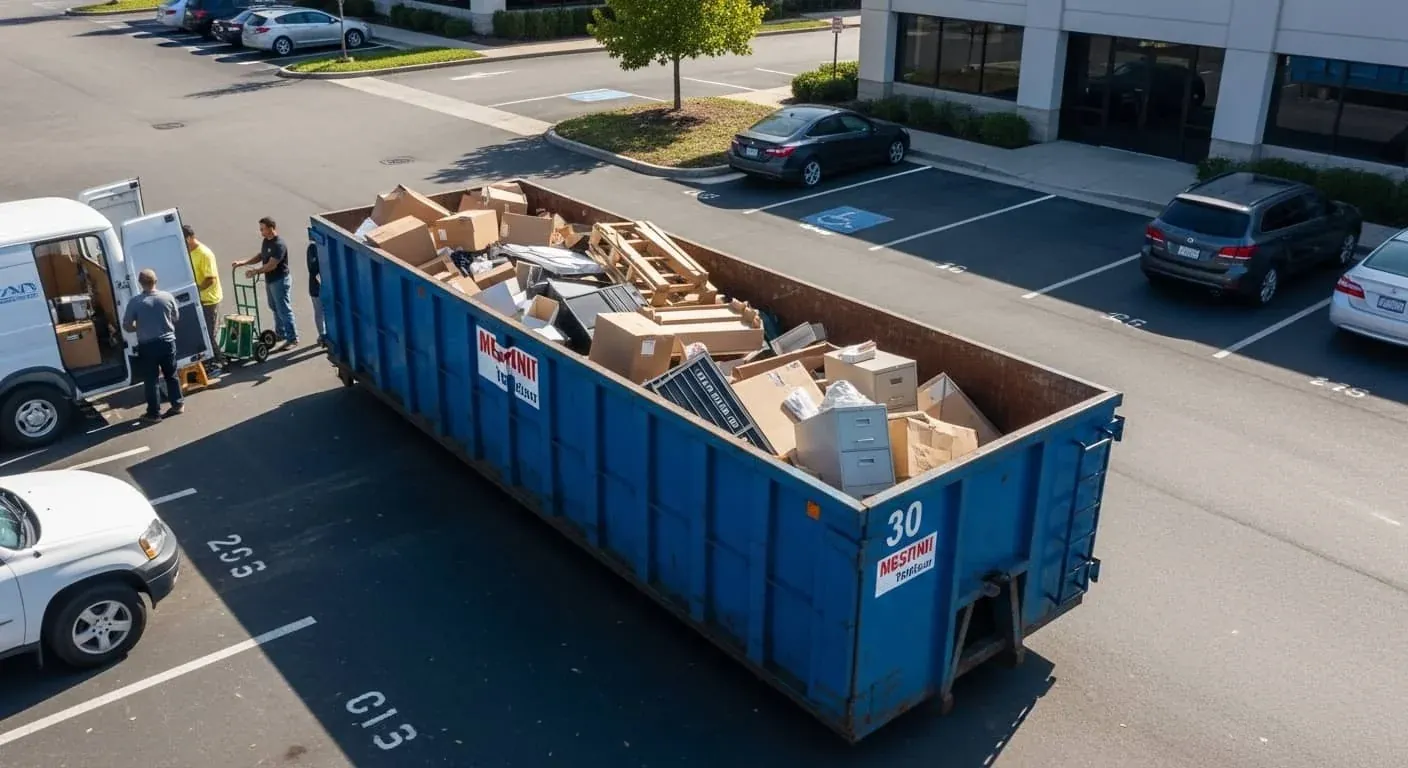
I have been loading roll-offs around Rock County long enough to know how the conversation goes. Somebody books a box for a garage cleanout, and four hours in they call and ask, "Hey, can the old TV go in?" Fair question. The answer is no, and it is not because we are being difficult — Wisconsin has a stack of landfill bans on the books, and the scale house enforces them harder than most people expect.
So here is the plain-English version: what you can throw in a dumpster in Janesville, what you cannot, why the state says no, and where the banned stuff actually goes instead. Tape it to the garage door and you will avoid the two things that cost homeowners money — sorting fees and a refused load.
The Easy Yes: What Goes In Without a Second Thought
Most of what comes out of a Janesville house or job site is perfectly fine. If it is dry, solid, non-hazardous, and not on the state's ban list, it goes in the box.
Household junk and furniture
- Furniture — couches, recliners, dressers, bed frames, mattresses, dining sets, patio sets
- Boxes, bags, and clutter — clothes, toys, books, paper, kitchenware, decorations
- Carpet and pad — roll it, tie it, keep rolls under four feet so they lay flat
- Cabinets and countertops — laminate, wood, even granite in small amounts
- Non-refrigerant small appliances — microwaves, toasters, vacuums, a treadmill
That covers almost every estate cleanout and basement purge we run.
Construction and remodel debris
- Drywall and plaster — including lath from older near-west-side homes
- Lumber, trim, framing, and subfloor — treated wood is fine in a standard load
- Flooring — tile, vinyl, laminate, hardwood, and the underlayment
- Roofing shingles — asphalt three-tab and architectural, plus felt and ridge cap
- Siding, windows, doors, insulation, and old decking
Shingles are heavy — roughly 250 pounds per square of three-tab — so a tear-off wants a smaller box with a higher weight allowance, which is what a roofing dumpster is set up for.
Concrete, brick, block, and dirt — in a dedicated load
Clean concrete, brick, block, asphalt, stone, and dirt are all accepted, but they need their own box. A 10-yard of concrete outweighs a fully loaded 30-yard of household junk, and mixing rubble with wood kills its recycling value. Ask for a dedicated heavy debris load.
Why Wisconsin Bans What It Bans
Wisconsin started banning materials from landfills in the early 1990s and the list has grown since. The reasoning varies. Some items are genuinely hazardous once they break down in a landfill cell — mercury, lead, refrigerant. Some have a funded recycling stream already waiting, like E-Cycle Wisconsin. And some, like yard waste, eat enormous airspace and generate methane when they should be composting.
Whatever the reason, the ban is on the landfill, which means it lands on us at the scale house and on you as a sorting charge. The full list lives on the Wisconsin DNR site; here is the working version.
Allowed vs. Banned at a Glance
| Goes in the dumpster | Banned in Wisconsin — goes elsewhere |
|---|---|
| Furniture, mattresses, carpet | TVs, computers, monitors, printers (E-Cycle WI) |
| Household junk, clothing, boxes | Refrigerators, freezers, A/C, dehumidifiers |
| Drywall, plaster, lath | Major appliances / white goods |
| Lumber, trim, framing, decking | Tires (on or off the rim) |
| Flooring, tile, underlayment | Lead-acid and rechargeable batteries |
| Asphalt shingles, felt, siding | Used motor oil and oil filters |
| Cabinets, countertops, doors, windows | Yard waste, leaves, grass, brush |
| Insulation, non-friable fiberglass | Fluorescent tubes, CFLs, mercury devices |
| Concrete, brick, block (dedicated load) | Liquid paint, solvents, chemicals |
| Small non-refrigerant appliances | Propane tanks and pressurized cylinders |
| Dirt, sod-free soil, stone (dedicated load) | Asbestos-containing materials |
| Toys, tools, sporting goods, bikes | Medical/sharps waste and any free liquids |
The Banned List — and Where It Actually Goes
Electronics: the E-Cycle Wisconsin ban
The one that surprises people most. Since 2010 Wisconsin has banned televisions, computers, laptops, tablets, monitors, printers, and peripherals from landfills and incinerators, no matter how old or broken. Take them to a registered E-Cycle Wisconsin collector — there are drop-offs in Janesville and around Rock County, and manufacturers fund much of the cost. Old tube TVs may carry a small fee for the leaded glass, still cheaper than a sorting charge.
Appliances, white goods, and anything with refrigerant
Refrigerators, freezers, window A/C units, dehumidifiers, and heat pumps hold refrigerant that must be professionally evacuated before the shell is scrapped. Stoves, washers, dryers, and water heaters are banned as major appliances too. Scrap metal has value, so a local scrapper will often take them free or pay you a few bucks, and most retailers haul the old unit when they deliver the new one.
Tires
Banned since 1995, on or off the rim. Tires do not stay buried — they float up through a landfill cell and trap methane. Most tire shops take them for a couple dollars each, and Rock County runs collection events. Find a pile behind a rental property's shed? Budget for it separately.
Lead-acid batteries
Car, truck, boat, mower, and UPS batteries are banned outright — lead and sulfuric acid do not belong in a landfill. Every auto parts store in town takes them back, usually with a core credit. Rechargeable lithium and NiCd packs go to a battery drop-off too; a punctured lithium cell in a compacting truck is a real fire risk.
Used oil, oil filters, and antifreeze
One gallon of used motor oil fouls a serious amount of groundwater, and we sit right on the Rock River. Oil is banned, filters are banned, antifreeze goes to household hazardous waste. Auto parts stores and quick-lube shops usually accept used oil free — drain filters overnight first.
Yard waste, leaves, grass, and brush
Wisconsin banned yard waste from landfills in 1993. Leaves, grass, garden debris, and brush must be composted or chipped. The City of Janesville runs a yard waste site and seasonal curbside collection — check janesvillewi.gov for hours. Stumps, storm limbs, and landscape teardowns are what our yard waste removal service is for; it runs to a compost facility as a separate load from your remodel debris.
Fluorescent bulbs and mercury devices
Four-foot shop tubes, CFLs, HID bulbs, and old mercury thermostats and thermometers all contain mercury, and one broken tube contaminates a whole load. Home improvement stores take tubes and CFLs; Rock County's household hazardous waste program handles the rest — see co.rock.wi.us. LED bulbs are fine in the dumpster.
Paint: latex versus oil-based
This distinction saves the most hassle. Oil-based paint, stain, varnish, and solvent are hazardous waste, period — household hazardous waste, no exceptions. Latex is not hazardous, but liquids of any kind are banned, so it has to be dried out first. Pop the lid off a half-empty can and let it sit a week or two. For a full can, stir in cat litter, sawdust, or paint hardener until it is solid through, then leave the lid off so the driver can see it is cured. Once it is a hard puck, it rides along fine.
Propane tanks and pressurized cylinders
Grill tanks, camping cylinders, helium tanks, and old refrigerant jugs are banned because they explode. Not "might" — they do, in compactors and at transfer stations. Exchange cages at hardware stores and gas stations take grill tanks; household hazardous waste handles the odd ones.
Asbestos in older Janesville homes
This one matters here. Much of Janesville's housing stock predates 1980, so asbestos shows up in cement-board siding, nine- and twelve-inch floor tile plus the black mastic beneath, pipe and boiler wrap, ceiling texture, and old roofing felt. Never tear that out yourself and never put it in a dumpster. Test it, and if positive, hire a Wisconsin-certified abatement contractor to remove, bag, and manifest it to a permitted facility. Once they sign off, the rest of the demolition debris comes out in a normal roll-off.
Medical waste and free liquids
Sharps, needles, IV bags, and infectious waste have their own stream — pharmacies and clinics take sharps containers. As a blanket rule, no free liquids: no pool chemicals, fuel, half-full drums, or water in the bottom of a tote. Empty it, dry it, then it goes in.
What Happens If Banned Items End Up in the Box
Nobody is trying to catch you out, but the consequences are real because they land on the hauler first:
- The driver refuses the load at pickup. A fridge or TV in plain sight means the box stays on your driveway until it comes out — a return trip and a dry-run fee.
- The landfill charges a sorting fee. Caught at the scale, we pay to have it pulled and rerouted, and that gets passed along — typically far more than proper recycling would have cost.
- Hazardous material triggers a full inspection. A leaking paint can or busted fluorescent tube can put the whole container on hold.
One thing worth saying plainly: none of this changes with container size. The E-Cycle Wisconsin electronics ban, the yard waste ban, tires, refrigerant appliances, lead-acid batteries, used oil and fluorescent tubes apply exactly the same to a 10 yard as they do to a 40 yard. Ordering a bigger box does not buy permission to put banned material in it. The one rule that genuinely shifts with the container is the level-load requirement. The taller the walls, the more tempting it gets to heap material above the top rail — and a 40 stands two feet taller than a 30 on the same footprint. An overfilled container can't legally be tarped or transported at any size, so everything stays below the rail.
All of it is avoidable with a ten-minute conversation before delivery. Describe what you are throwing out and we will tell you straight what needs another destination.
How to Plan a Mixed Cleanout
Most real projects produce three piles, not one. Handle it like this:
- Sort before the box arrives. Stage a "banned corner" in the garage — electronics, batteries, paint, bulbs, chemicals.
- Make one hazardous run. Batch the household hazardous waste and E-Cycle drop-offs into a single Saturday trip.
- Line up the scrap. Appliances and metal go to a scrapper, often free pickup.
- Keep heavy debris separate. Concrete and dirt get a dedicated load, not a corner of the household box.
- Then fill the roll-off. For a whole-house cleanout or a good-sized remodel, a 20-yard dumpster is the workhorse — big enough for furniture and bulky debris, still low enough to walk items over the side.
Little J's Dumpster Rental Janesville is family-owned, licensed and insured, flat-rate, with same-day or next-day delivery across Janesville and Rock County. If you have a pile in the driveway and you are not sure what is allowed, call (608) 531-8367 — we will size the box, quote it flat, and tell you which few items need a different destination. No surprise sorting fees, no wasted trips.
Need a container in Janesville or anywhere in Rock County? Call (608) 531-8367 and describe the job. We will name the size, the flat rate and a delivery slot — often the same day. No forms, no waiting on an email.