
Construction Dumpster Rental · Janesville, WI
Construction Dumpster Rental in Janesville, WI
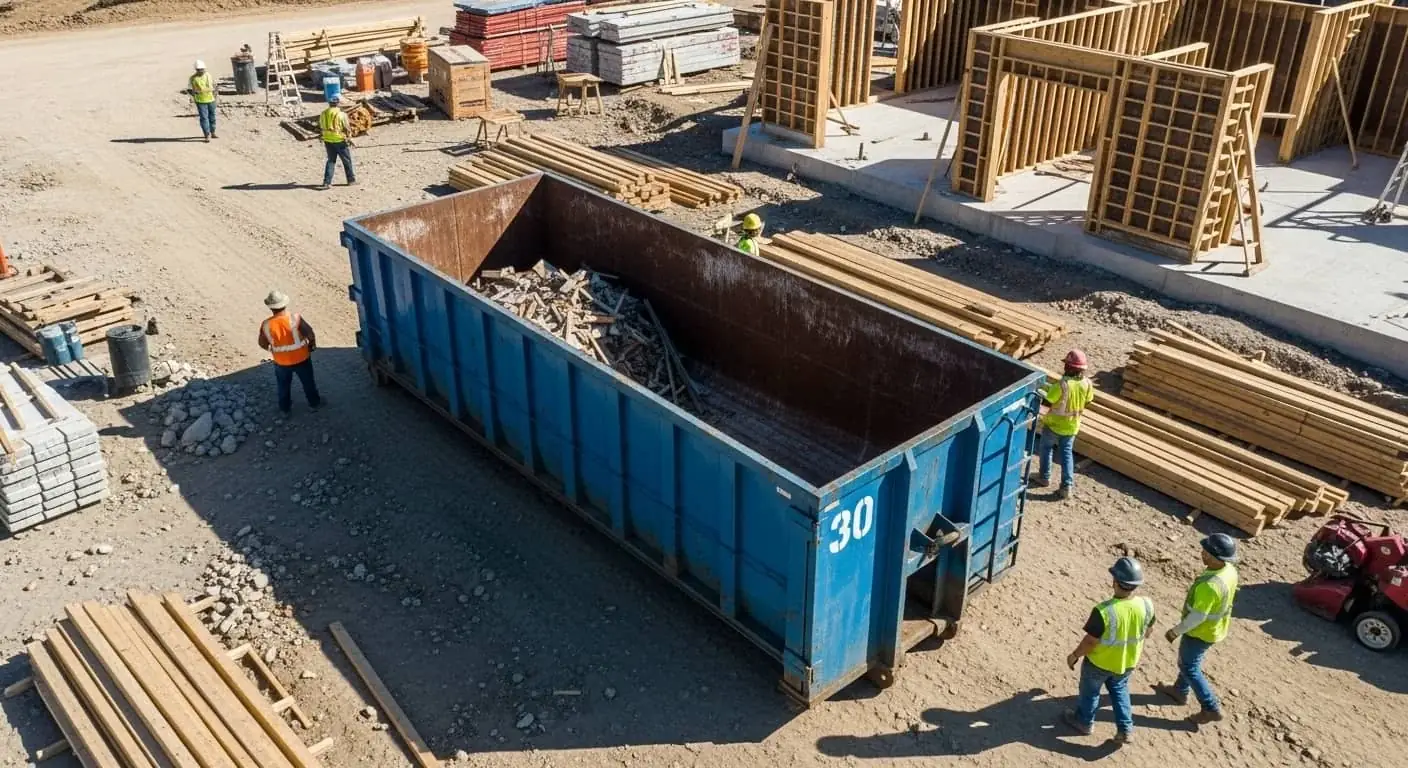
Roll-off containers sized and scheduled around a working job site, with quick swaps so your crew never stops loading, and honest talk about weight before the load leaves the site.
- Same-day & next-day delivery
- Flat-rate, all-in pricing
- Driveway protection included
- Same-Day DeliveryCall before noon and we can usually be there today.
- Flat-Rate PricingDelivery, pickup, disposal and tax quoted up front.
- Licensed & InsuredFully insured and licensed to haul in Wisconsin.
- Locally Owned2012-founded, family run, based right here in Janesville.
Overview
Construction Dumpster Rental in Janesville
Contractors do not need a sales pitch, they need the box on site when the crew shows up and swapped before it is full. Little J's has been running construction containers around Janesville and Rock County since 2012, working with remodelers, framers, GCs, restoration crews and owner-builders. We are a small family outfit, which means the person who answers the phone can actually change tomorrow's schedule.
Flat-rate pricing covers delivery, pickup, a weight allowance, disposal and tax in one number, which makes a container easy to line-item in a bid. If a load runs over the allowance, you know the overage rate before the truck leaves the yard. There are no surprise surcharges at the end of a job when you are already trying to close out the billing.
The two things that go wrong on construction jobs are sizing and timing. Sizing goes wrong when a crew looks at cubic yards and forgets that a remodel debris stream is heavy - plaster, tile, mortar bed, wet lumber and old shingles all fill the weight allowance long before they fill the box. Timing goes wrong when nobody calls for the swap until the container is already mounded, which costs a half day of production while material piles on the ground. Both are avoidable with a five-minute conversation at the start of the job.
We run 10, 15, 20, 30 and 40 yard containers out of the yard at 103 S Grant Ave, with same-day and next-day delivery on most orders and swaps usually turned inside 24 hours. We cover Janesville, Milton, Edgerton, Evansville and the rest of the county. Call (608) 531-8367 and tell us the scope, the surface and the schedule.
Accepted materials
What goes in — and what doesn't
Good for
- Remodel and gut-out debris
- Framing scrap and lumber
- Drywall, plaster and lath
- Cabinets, trim and flooring
- Siding, windows and doors
- Deck, garage and shed demolition
- Storm and restoration debris
Cannot go in
- Asbestos-containing material
- Concrete, brick and dirt in mixed loads
- Paints, solvents and adhesives in liquid form
- Fuel, oil and hydraulic fluid
- Refrigerant appliances and equipment
- Tires, batteries and fluorescent lamps
Wisconsin bans a specific list of materials from landfills. If you are unsure about an item, call (608) 531-8367 before it goes in the container — it costs nothing to ask and a lot to sort out afterwards. Full detail in our banned materials guide.
Sizing by Debris Stream, Not by Square Footage
Square footage of the project is a weak predictor. What the debris actually is tells you far more. Here is how we think about it on Janesville jobs.
- Mixed remodel debris (framing scrap, drywall, cabinets, trim, insulation): bulky and moderate weight. A 20 or 30 yard fits most of these comfortably.
- Plaster and lath from a pre-1950 gut in the older neighborhoods: two to three times the weight of the same wall area in drywall. Size up on capacity and load light.
- Tile, mortar bed and old shower pans: extremely heavy for the volume. This is 10 or 15 yard territory, filled part way.
- Roofing tear-off: its own math entirely, covered on our roofing container page.
- Concrete, block, brick, asphalt and dirt: these do not belong in a mixed construction load at all. They go in a dedicated heavy debris container, which is a different container and a different price structure.
- Full structure demolition: multiple 30 or 40 yard pulls, planned ahead. See demolition debris.
The practical rule we give contractors: pick the size by weight for anything masonry-adjacent, and by volume for anything wood, drywall or cabinetry. When a job is genuinely mixed, split it. Put the heavy stream in a small box and the bulky stream in a big one. Two right-sized containers frequently cost less than one wrong-sized container plus an overage charge, and they load faster because your laborers are not sorting on the fly. More detail in our guide to construction debris disposal in Janesville.
Keeping the Crew Loading: Swap-Out Scheduling
A full container with nowhere to throw material is the most expensive thing on a job site. Labor stands around, debris piles up on the deck, and you lose the rest of the day. The fix is to schedule swaps against the work, not against the fill line.
Call for the swap when the box is about three-quarters
That gives us a window to fit you into a route and gives your crew a buffer. If you wait until it is mounded above the rails, we may not legally be able to haul it, and someone will be pulling material back off with a pitchfork while the truck idles.
Tell us the demo schedule at the start
If you know tear-out runs Monday to Wednesday and you are framing Thursday, we can pre-book a Wednesday afternoon swap. On bigger jobs we will set two containers so one is always empty, which is almost always cheaper than the downtime it prevents.
Plan around the site, not just the calendar
- Leave the pull path clear; a container boxed in by a lumber delivery or a stall of trades trucks costs everyone a trip charge
- Keep the box within throwing distance of the work, but off the future driveway pour
- On a multi-phase job, move the container as the work moves rather than making laborers walk material
- Give us a gate code or a site contact if the property is secured
Same-day service exists for the days it goes sideways, and we do run it. But a container booked Friday for Monday morning is always a smoother start than a scramble at 7am. If you truly need it now, see same-day rental.
Winter, Spring Thaw and Rock County Road Limits
Wisconsin adds two seasonal problems that contractors from warmer states do not think about until they get bitten.
Spring thaw is the big one. As the frost comes out of the ground in March and April, subgrade under rural roads turns soft and municipalities and the county post reduced weight limits on many town and county roads until the ground firms up. If your job is out toward Orfordville, Footville or anywhere on a rural stretch, a fully loaded 30 yard may not be legal to pull down that road for several weeks. The workaround is straightforward once you know about it: smaller containers, lighter loads, more frequent pulls. Tell us the site address at booking and we will flag it. Posting details come from WisDOT and the county.
Frozen and thawing site conditions matter too. A container set on frozen ground in January can be locked in place by a February thaw and refreeze. Gravel pads, plywood or a spot on the paved drive keep you from needing a machine to break the box loose. Snow storage is the other one: the pile the plow leaves in December frequently ends up exactly where the pull path needs to be.
Cold-weather load habits
- Do not let debris freeze into one solid mass; it can prevent the load from dumping and you get charged for a return trip
- Keep snow and ice out of the box, since you are paying weight allowance on frozen water
- Tarp between work days to keep rain and snowmelt out of drywall and insulation
- Clear the pull path of ice before the truck arrives so the driver is not working on a skating rink
Summer has its own version: hot July asphalt takes an impression from a loaded box, so boards go down on paved drives.
Separating Loads to Cut Disposal Cost
Everything in a mixed construction container gets priced as mixed waste. Some of what goes in it has real recovery value or a cheaper disposal path, and pulling those streams out is one of the few levers a contractor actually controls on disposal cost.
Worth separating on most jobs
- Clean scrap metal: ductwork, old boilers, cast iron radiators, pipe, steel studs, appliances stripped of refrigerant. Usually worth more than it costs to handle.
- Clean concrete, brick and block: not just cheaper handled separately, it should not be in a mixed box in the first place.
- Clean untreated wood: framing scrap and pallets, kept free of drywall dust and painted material.
- Clean cardboard: significant volume on any job with new cabinets, appliances or fixtures, and it eats container space fast when it is not broken down.
What kills a separated load is contamination. One bag of mixed trash in a clean wood container and it is a mixed load again. If you are going to separate, brief the crew and label the boxes, because a laborer at 3pm will throw material in whatever is closest.
Some materials are legally excluded regardless of cost. Wisconsin bans yard waste, tires, lead-acid batteries, used oil, fluorescent lamps, electronics and refrigerant appliances from landfill disposal, and asbestos-containing material is regulated separately and never goes in a roll-off. Older Janesville homes can have asbestos in floor tile, mastic, pipe wrap and some siding; if you suspect it, stop and get it tested. Background on recovering construction materials is at the EPA C and D materials program.
Placement, Site Safety and Documentation
Where the container sits determines how fast the job loads and how much damage you pay for at the end.
Placement. Close to the work but off anything you will finish later. Do not set a box on a new driveway pour, a septic field, a sidewalk you are responsible for, or soft ground that will rut. On residential remodels in the older Janesville grid, an alley drop often beats the driveway because it keeps the drive open for the crew. On new construction, set it where it will still make sense in three weeks.
Safety. Keep the load below the rails; a heaped box is not haulable and material blowing off a truck is your liability as much as ours. Do not let anyone climb in to jump debris down. Keep the barn doors latched unless you are actively walking material in, and keep the swing path clear. Standard site rules under OSHA apply to the area around the container the same as anywhere else on the job.
Documentation clients and lenders ask for
- Dated invoices tied to a job number for cost coding and draw requests
- Scale tickets when a client, insurer or program requires proof of disposal weight
- Separate documentation of recycled streams if the project has diversion targets
Ask for this at the start of the job, not at closeout. It is easy for us to attach paperwork as we go and a nuisance to reconstruct three months later.
One last thing: give us a real site contact. The number of jobs where the truck arrives and the only person on site is a drywall sub who has no idea where the box goes is higher than it should be. Two minutes of coordination saves a trip charge.
Sizing
Which size for this job?
| Container | When it suits this job |
|---|---|
| 10 Yard | Tile, mortar bed, plaster and other dense tear-out where you hit the weight allowance well before the box is full. |
| 15 Yard | Single-room gut jobs, small bath remodels and tight urban lots where a shorter box is the only thing that fits. |
| 20 Yard | Kitchen and bath remodels, siding and window jobs, and most mid-size mixed construction debris. |
| 30 Yard | Whole-floor remodels, additions, garage demolition and new construction framing scrap on a running job. |
| 40 Yard | Large demolition, commercial build-out and any job producing high volumes of bulky, lightweight debris. |
Still weighing it up? Read the full sizing guide, compare every container size, or just describe the job on the phone and we will pick for you.
Need construction dumpster rental in Janesville?
One call gets you a size, a flat rate and a delivery slot. Usually under four minutes.
Answers
Construction Dumpster Rental — questions we get asked
How fast can you swap a full container?
Most swaps go out within 24 hours, and same-day is often possible if you call early in the day. The best practice is to call when the box is around three-quarters full rather than mounded, which gives us room to fit you into a route and keeps your crew loading in the meantime. On demolition-heavy phases we will set two containers so one is always empty, which usually costs less than the downtime it prevents.
Can I put concrete or dirt in a construction dumpster?
Not in a mixed construction load. Concrete, brick, block, asphalt, stone and soil are dense enough that a partly filled box blows past a normal weight allowance, and they need a separate disposal path anyway. We run dedicated heavy debris containers for that material at a different price structure. If your job produces both, take two containers, keep the heavy one clean, and you will spend less than you would on a single overloaded box.
Do spring road weight limits affect delivery?
They can, on rural jobs. When frost comes out of the ground in March and April, town and county roads around Rock County are often posted with reduced weight limits until the subgrade firms up. A site out toward Orfordville, Footville or on a gravel town road may need smaller containers, lighter loads and more frequent pulls for a few weeks. Give us the exact site address when you book and we will flag it before it becomes a problem on delivery day.
What about asbestos in older Janesville houses?
Asbestos-containing material never goes in a roll-off. Homes in the Fourth Ward, Courthouse Hill and Look West can have it in nine-inch floor tile and mastic, pipe and boiler insulation, some plaster skim coats, and older siding and roofing products. If you have not tested and something looks suspect, stop and have it sampled by a qualified inspector. Removal is a licensed abatement job with its own disposal chain, and a contaminated load creates liability for everyone on the site.
Where should the container go on a job site?
Close enough that laborers are throwing rather than carrying, but off anything you will finish later: no new driveway pours, septic fields, soft ground or sidewalks you are responsible for. Keep 60 feet of straight approach clear and check overhead for service drops and branches. On older Janesville remodels an alley drop often beats the driveway because it keeps access open for trades. Tell us the surface and we will bring protection boards.
Service area
We deliver across Rock County and beyond
You might also need
Related services
Verified sources
Local & Official Resources
We are a private hauler, not a government agency. For rules, fees and hours, always go straight to the source:
- City of Janesville — permits, right-of-way, refuse & recycling for city addresses
- Rock County, Wisconsin — county recycling, clean sweep and household hazardous waste
- Wisconsin DNR waste & materials management — Wisconsin landfill bans and recycling requirements
- E-Cycle Wisconsin — where TVs, monitors and computers must go instead
- Wisconsin DOT — seasonal weight limits and posted spring road restrictions
- Diggers Hotline (811) — call 811 before any digging or footing work